

Economics Training Courses
Economics Training Courses are designed to equip professionals, policymakers, and development practitioners with the knowledge and skills needed to analyze economic trends, formulate policies, and make informed decisions. These courses cover key areas such as macroeconomics, microeconomics, economic policy, fiscal and monetary management, trade, and development economics. Participants gain a deep understanding of economic principles and their practical applications in business, government, and development sectors.
The training emphasizes practical learning through case studies, data analysis, and real-world scenarios, enabling participants to interpret economic indicators, assess market dynamics, and develop effective strategies for growth and sustainability. These courses are ideal for economists, financial analysts, public sector officials, business leaders, and development professionals seeking to enhance their economic knowledge and decision-making capabilities across Africa.
Economics Training Courses are designed to equip professionals, policymakers, and business leaders with a comprehensive understanding of economic principles, policies, and analytical tools. These courses cover key topics such as microeconomics, macroeconomics, economic policy analysis, market structures, fiscal and monetary policy, and economic forecasting. Participants gain the skills needed to interpret economic trends, evaluate policy impacts, and make informed decisions that support organizational and national development.
The training emphasizes practical application through case studies, data analysis, and real-world examples, enabling participants to apply economic theory to business, government, and development contexts. Participants also learn to assess market dynamics, manage economic risks, and contribute to strategic planning and policy formulation. These courses are ideal for economists, financial analysts, government officials, business managers, and development professionals across Africa seeking to enhance their economic expertise and decision-making capabilities.
We offers a comprehensive and regionally-focused suite of training courses designed to build rigorous analytical and practical capacities across the African continent. Targeting professionals from West Africa (The Gambia, Ghana, Liberia, Nigeria, Sierra Leone), East Africa (Kenya, Rwanda, Tanzania, Uganda), Southern Africa (Botswana, Eswatini, Lesotho, Malawi, Mauritius, Namibia, South Africa, Zambia, Zimbabwe), and Central & North Africa (Cameroon, Eritrea, Sudan, South Sudan, Ethiopia), the curriculum is structured around two interconnected pillars. The first is a robust series in Development Economics, covering critical themes from participatory development, climate-smart agriculture, and public health to governance, private sector engagement, and the Sustainable Development Goals (SDGs). This is complemented by a deep specialization in Impact Evaluation and Econometrics, offering courses ranging from foundational regression analysis and panel data to advanced techniques like machine learning, Bayesian econometrics, and spatial analysis, all essential for measuring program effectiveness and informing evidence-based policy.
The development-focused courses address the continent’s most pressing challenges and opportunities with remarkable specificity. Sessions on Digitalization and Economic Development, Global Value Chains, and Technology and Innovation for Development speak directly to strategies for economic transformation and integration. Concurrently, courses on Conflict and Development, Land Rights, Disaster Risk Reduction, and Climate-Smart Agriculture provide tools for building resilience in fragile and vulnerable contexts. Regionally pertinent topics, such as Development Economics in the African Context and Public Health and Economic Development, ensure the training is grounded in local realities. This practical knowledge is fortified by the institute’s parallel strength in quantitative methods, where courses like Econometric Forecasting with Python, Microeconometrics, and Causal Inference Methods equip participants with the statistical rigor to design, assess, and communicate the impact of development interventions accurately.
Ultimately, this dual-focused training portfolio empowers African practitioners, policymakers, and researchers to bridge the gap between theory and practice. By mastering both the contextual nuances of development issues and the advanced technical skills of econometric analysis, graduates are positioned to drive more effective, data-driven, and sustainable growth. Whether leveraging Behavioral Economics for Development, securing funding through Development Finance, or applying Complexity Science to Development Challenges, participants from across the continent will be equipped to tackle interconnected systemic challenges, optimize resource allocation, and lead evidence-informed initiatives that foster inclusive prosperity and resilience in their respective regions.
| Course Code | Course Title | Primary Category |
|---|---|---|
| DEVELOPMENT ECONOMICS & PRACTICE | ||
| INST-101 | Introduction to Development Economics for Practitioners | Development Core |
| INST-102 | Poverty Analysis and Measurement | Development Core |
| INST-103 | Inequality and Inclusive Growth | Development Core |
| INST-104 | Development Economics in the African Context: Focusing on Regional Challenges and Opportunities | Thematic Development |
| INST-105 | Trade and Development: Understanding the Role of International Trade in Economic Growth | Thematic Development |
| INST-106 | Foreign Aid and Development Assistance: Effectiveness and Best Practices | Thematic Development |
| INST-107 | Global Value Chains and Development: Opportunities and Challenges for Developing Countries | Thematic Development |
| INST-108 | The Role of the Private Sector in Development: Fostering Partnerships for Growth | Thematic Development |
| INST-109 | Urbanization and Development Challenges: Managing Growth in Urban Areas | Thematic Development |
| INST-110 | Rural Development Strategies: Addressing the Specific Needs of Rural Populations | Thematic Development |
| INST-111 | Land Rights and Development: The Role of Secure Tenure in Economic Progress | Thematic Development |
| INST-112 | Infrastructure Development and Economic Growth: Investing in Essential Services | Thematic Development |
| INST-113 | Conflict and Development: Addressing the Economic Impacts of Fragility and Violence | Thematic Development |
| INST-114 | Disaster Risk Reduction and Development: Building Resilience to Shocks | Thematic Development |
| INST-115 | Applying Complexity Science to Development Challenges: Understanding Interconnected Systems | Thematic Development |
| SECTORAL & POLICY DEVELOPMENT | ||
| INST-201 | Public Policy Analysis for Development: Influencing Policy for Better Outcomes | Policy & Governance |
| INST-202 | Governance and Development: The Importance of Institutions and Rule of Law | Policy & Governance |
| INST-203 | Decentralization and Local Economic Development: Empowering Local Communities | Policy & Governance |
| INST-204 | Project Cycle Management in Development | Management |
| INST-205 | Development Finance and Resource Mobilization: Securing Funding for Development Initiatives | Management |
| INST-206 | Sustainable Development Goals (SDGs): Implementation and Monitoring | Management |
| INST-207 | Development Communication and Advocacy: Effectively Conveying Development Messages | Management |
| INST-208 | Participatory Development Approaches: Engaging Communities in the Development Process | Management |
| HEALTH, AGRICULTURE & SOCIAL SECTORS | ||
| INST-301 | Public Health and Economic Development: The Interplay Between Health and Prosperity | Social Sectors |
| INST-302 | Health Economics for Development: Analyzing Health Systems and Outcomes in Developing Countries | Social Sectors |
| INST-303 | Education and Human Capital Development: Investing in People for Economic Growth | Social Sectors |
| INST-304 | Social Protection Programs: Designing and Implementing Effective Safety Nets | Social Sectors |
| INST-305 | Food Security and Agricultural Development: Strategies for Improving Livelihoods and Nutrition | Agriculture |
| INST-306 | Climate-Smart Agriculture for Development: Sustainable Farming Practices | Agriculture |
| INST-307 | Microfinance and Financial Inclusion: Expanding Access to Financial Services for the Poor | Finance |
| INST-308 | Entrepreneurship and Small Business Development: Fostering Local Economic Activity | Finance |
| TECHNOLOGY & ENVIRONMENT | ||
| INST-401 | Digitalization and Economic Development: Leveraging Digital Technologies for Transformation | Technology |
| INST-402 | Technology and Innovation for Development: Leveraging New Tools for Progress | Technology |
| INST-403 | Environmental Economics and Sustainable Resource Management: Balancing Growth with Protection | Environment |
| IMPACT EVALUATION & BEHAVIORAL INSIGHTS | ||
| INST-501 | Impact Evaluation for Development Programs | Impact & Methods |
| INST-502 | Impact Evaluation Methods | Impact & Methods |
| INST-503 | Behavioral Economics for Development: Understanding Decision-Making in Poverty | Impact & Methods |
| INST-504 | Behavioural Economics and Psychology in Marketing | Impact & Methods |
| ECONOMETRICS & QUANTITATIVE METHODS | ||
| INST-601 | Introduction to Econometrics with R | Core Econometrics |
| INST-602 | Applied Regression Analysis in Econometrics | Core Econometrics |
| INST-603 | Advanced Regression Techniques | Core Econometrics |
| INST-604 | Time Series Analysis and Forecasting in Economics | Core Econometrics |
| INST-605 | Panel Data Analysis in Economics | Core Econometrics |
| INST-606 | Microeconometrics | Core Econometrics |
| INST-607 | Econometrics of Development | Core Econometrics |
| INST-608 | Econometric Methods for Policy Analysis | Core Econometrics |
| INST-609 | Quantitative Methods for Economic Research | Core Econometrics |
| SPECIALIZED ECONOMETRIC METHODS | ||
| INST-701 | Causal Inference Methods in Economics | Advanced Methods |
| INST-702 | Bayesian Econometrics | Advanced Methods |
| INST-703 | Spatial Econometrics | Advanced Methods |
| INST-704 | Generalized Method of Moments (GMM) for Advanced Econometric Analysis | Advanced Methods |
| INST-705 | Nonparametric Econometrics: Flexible Methods for Estimating Economic Relationships | Advanced Methods |
| INST-706 | Structural Equation Modeling (SEM) | Advanced Methods |
| INST-707 | Survival Analysis and Duration Models | Advanced Methods |
| INST-708 | Dynamic Panel Data Models (Advanced): Exploring Complex Panel Data Techniques | Advanced Methods |
| INST-709 | Time Series Econometrics with Structural Breaks: Analyzing Time Series with Sudden Changes | Advanced Methods |
| INST-710 | Network Econometrics: Analyzing Economic Interactions within Networks | Advanced Methods |
| INST-711 | Econometrics of Auctions: Modeling and Analyzing Auction Data | Advanced Methods |
| INST-712 | Behavioral Econometrics: Integrating Psychological Insights into Econometric Models | Advanced Methods |
| INST-713 | Computational Econometrics: Focus on Numerical Methods and Simulation | Advanced Methods |
| APPLIED ECONOMETRICS & TOOLS | ||
| INST-801 | Financial Econometrics | Applied Fields |
| INST-802 | Econometrics for Business and Finance | Applied Fields |
| INST-803 | Econometrics of Risk Management | Applied Fields |
| INST-804 | Labor Econometrics | Applied Fields |
| INST-805 | Health Econometrics | Applied Fields |
| INST-806 | Environmental Econometrics | Applied Fields |
| INST-807 | Econometrics for Agricultural Economics | Applied Fields |
| INST-808 | Econometrics of Education: Analyzing Factors Affecting Educational Outcomes | Applied Fields |
| INST-809 | Energy Econometrics: Modeling and Forecasting Energy Markets | Applied Fields |
| DATA SCIENCE & FORECASTING | ||
| INST-901 | Machine Learning for Econometrics | Data Science |
| INST-902 | Big Data Econometrics | Data Science |
| INST-903 | Econometric Forecasting with Python | Data Science |
| INST-904 | Nowcasting and High-Frequency Data Analysis: Analyzing Real-Time Economic Indicators | Data Science |
| PROFESSIONAL SKILLS | ||
| INST-1001 | Econometric Modeling in Stata | Software & Skills |
| INST-1002 | Data Visualization for Econometric Analysis | Software & Skills |
| INST-1003 | Communicating Econometric Results Effectively: Best Practices for Presenting and Interpreting Findings | Software & Skills |
Two-Week Training Courses Dates
| Start Date | End Date |
|---|---|
| Jan 5, 2026 | Jan 16, 2026 |
| Jan 12, 2026 | Jan 23, 2026 |
| Jan 19, 2026 | Jan 30, 2026 |
| Jan 26, 2026 | Feb 6, 2026 |
| Feb 2, 2026 | Feb 13, 2026 |
| Feb 9, 2026 | Feb 20, 2026 |
| Feb 16, 2026 | Feb 27, 2026 |
| Feb 23, 2026 | Mar 6, 2026 |
| Mar 2, 2026 | Mar 13, 2026 |
| Mar 9, 2026 | Mar 20, 2026 |
| Mar 16, 2026 | Mar 27, 2026 |
| Mar 23, 2026 | Apr 3, 2026 |
| Mar 30, 2026 | Apr 10, 2026 |
| Apr 6, 2026 | Apr 17, 2026 |
| Apr 13, 2026 | Apr 24, 2026 |
| Apr 20, 2026 | May 1, 2026 |
| Apr 27, 2026 | May 8, 2026 |
| May 4, 2026 | May 15, 2026 |
| May 11, 2026 | May 22, 2026 |
| May 18, 2026 | May 29, 2026 |
| May 25, 2026 | Jun 5, 2026 |
| Jun 1, 2026 | Jun 12, 2026 |
| Jun 8, 2026 | Jun 19, 2026 |
| Jun 15, 2026 | Jun 26, 2026 |
| Jun 22, 2026 | Jul 3, 2026 |
| Jun 29, 2026 | Jul 10, 2026 |
| Jul 6, 2026 | Jul 17, 2026 |
| Jul 13, 2026 | Jul 24, 2026 |
| Jul 20, 2026 | Jul 31, 2026 |
| Jul 27, 2026 | Aug 7, 2026 |
| Aug 3, 2026 | Aug 14, 2026 |
| Aug 10, 2026 | Aug 21, 2026 |
| Aug 17, 2026 | Aug 28, 2026 |
| Aug 24, 2026 | Sep 4, 2026 |
| Aug 31, 2026 | Sep 11, 2026 |
| Sep 7, 2026 | Sep 18, 2026 |
| Sep 14, 2026 | Sep 25, 2026 |
| Sep 21, 2026 | Oct 2, 2026 |
| Sep 28, 2026 | Oct 9, 2026 |
| Oct 5, 2026 | Oct 16, 2026 |
| Oct 12, 2026 | Oct 23, 2026 |
| Oct 19, 2026 | Oct 30, 2026 |
| Oct 26, 2026 | Nov 6, 2026 |
| Nov 2, 2026 | Nov 13, 2026 |
| Nov 9, 2026 | Nov 20, 2026 |
| Nov 16, 2026 | Nov 27, 2026 |
| Nov 23, 2026 | Dec 4, 2026 |
| Nov 30, 2026 | Dec 11, 2026 |
| Dec 7, 2026 | Dec 18, 2026 |
One-Week Training Courses Dates
| Start Date | End Date |
|---|---|
| Jan 5, 2026 | Jan 9, 2026 |
| Jan 12, 2026 | Jan 16, 2026 |
| Jan 19, 2026 | Jan 23, 2026 |
| Jan 26, 2026 | Jan 30, 2026 |
| Feb 2, 2026 | Feb 6, 2026 |
| Feb 9, 2026 | Feb 13, 2026 |
| Feb 16, 2026 | Feb 20, 2026 |
| Feb 23, 2026 | Feb 27, 2026 |
| Mar 2, 2026 | Mar 6, 2026 |
| Mar 9, 2026 | Mar 13, 2026 |
| Mar 16, 2026 | Mar 20, 2026 |
| Mar 23, 2026 | Mar 27, 2026 |
| Mar 30, 2026 | Apr 3, 2026 |
| Apr 6, 2026 | Apr 10, 2026 |
| Apr 13, 2026 | Apr 17, 2026 |
| Apr 20, 2026 | Apr 24, 2026 |
| Apr 27, 2026 | May 1, 2026 |
| May 4, 2026 | May 8, 2026 |
| May 11, 2026 | May 15, 2026 |
| May 18, 2026 | May 22, 2026 |
| May 25, 2026 | May 29, 2026 |
| Jun 1, 2026 | Jun 5, 2026 |
| Jun 8, 2026 | Jun 12, 2026 |
| Jun 15, 2026 | Jun 19, 2026 |
| Jun 22, 2026 | Jun 26, 2026 |
| Jun 29, 2026 | Jul 3, 2026 |
| Jul 6, 2026 | Jul 10, 2026 |
| Jul 13, 2026 | Jul 17, 2026 |
| Jul 20, 2026 | Jul 24, 2026 |
| Jul 27, 2026 | Jul 31, 2026 |
| Aug 3, 2026 | Aug 7, 2026 |
| Aug 10, 2026 | Aug 14, 2026 |
| Aug 17, 2026 | Aug 21, 2026 |
| Aug 24, 2026 | Aug 28, 2026 |
| Aug 31, 2026 | Sep 4, 2026 |
| Sep 7, 2026 | Sep 11, 2026 |
| Sep 14, 2026 | Sep 18, 2026 |
| Sep 21, 2026 | Sep 25, 2026 |
| Sep 28, 2026 | Oct 2, 2026 |
| Oct 5, 2026 | Oct 9, 2026 |
| Oct 12, 2026 | Oct 16, 2026 |
| Oct 19, 2026 | Oct 23, 2026 |
| Oct 26, 2026 | Oct 30, 2026 |
| Nov 2, 2026 | Nov 6, 2026 |
| Nov 9, 2026 | Nov 13, 2026 |
| Nov 16, 2026 | Nov 20, 2026 |
| Nov 23, 2026 | Nov 27, 2026 |
| Nov 30, 2026 | Dec 4, 2026 |
| Dec 7, 2026 | Dec 11, 2026 |
| Dec 14, 2026 | Dec 18, 2026 |
Training Venue
SOUTH AFRICA: Pretoria , Cape Town & Johannesburg | RWANDA: Kigali | ZIMBABWE :Victoria Falls | UAE: Dubai | KENYA: Nairobi
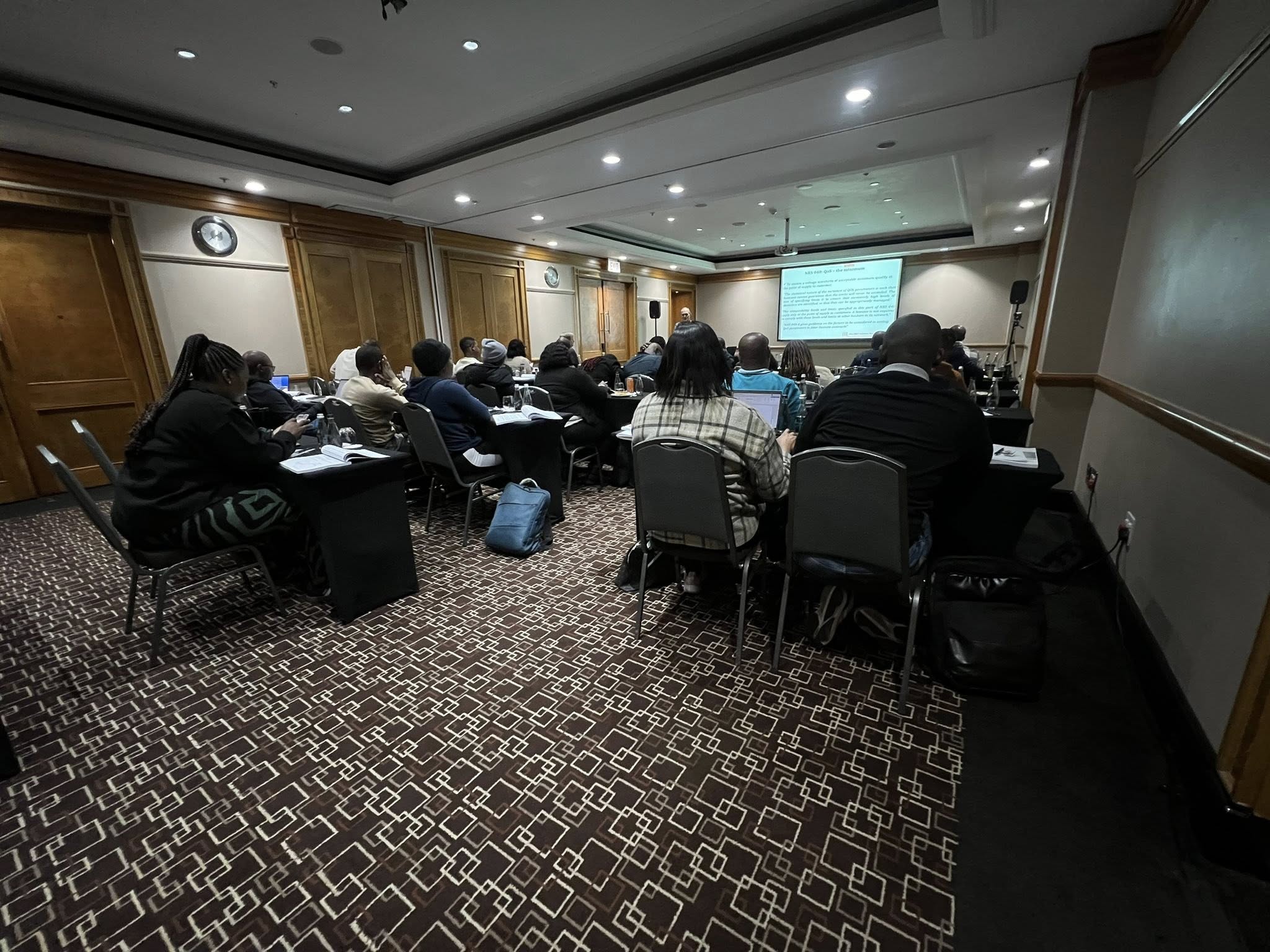
Register For One of Our Courses
Advance your professional journey through our specialized training programs, crafted specifically for mid-career experts in audit, risk management, governance, and business development. Led by experienced instructors with proven expertise, these courses—offered in Johannesburg and major African hubs—integrate hands-on learning, dynamic sessions, and practical examples to refine your abilities and boost company performance.